Loading...
Serving Fort Wayne, IN and surrounding areas. (260) 279-4710
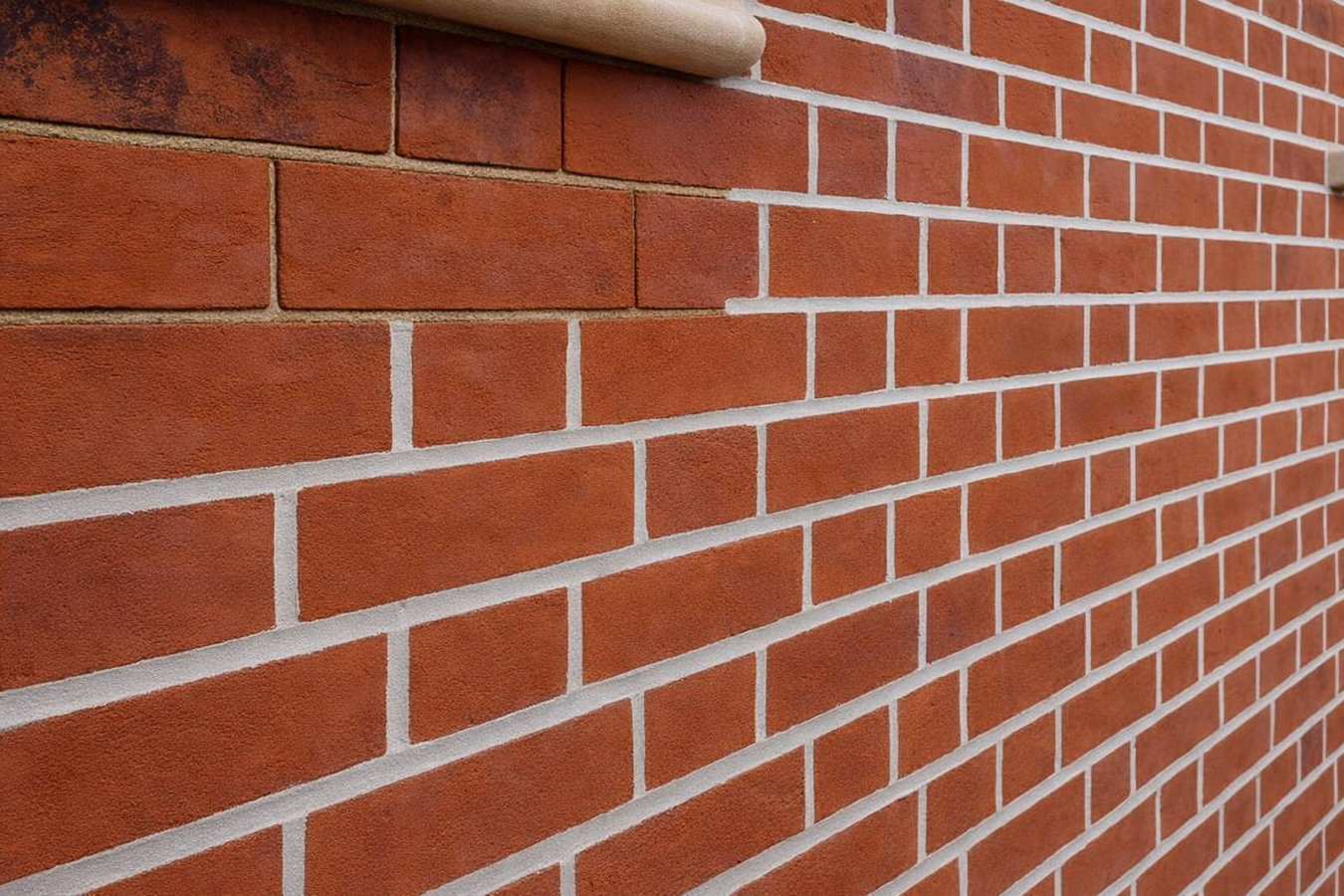
Open mortar joints let Fort Wayne's freeze-thaw cycles do real damage inside your walls. We remove the old material, pack in fresh matched mortar, and seal your brick before the cold arrives.
Brick pointing in Fort Wayne is the process of removing deteriorated mortar from the joints between bricks and replacing it with fresh mortar - old material is ground out to a consistent depth, then new mortar is packed in and tooled to match the original profile, with most residential jobs taking one to three days depending on scope.
Mortar is softer than brick by design - it absorbs stress and weather damage so the bricks themselves do not crack. Over time, typically 20 to 30 years in a climate like Fort Wayne's, mortar erodes and crumbles. Once joints open up, every freeze-thaw cycle pushes more water in and widens the gap. Many homeowners in Fort Wayne first notice the problem when they see white staining or crumbling mortar on a chimney, since chimneys take the hardest weather exposure on all sides.
Brick pointing is closely related to tuckpointing, which follows the same basic process of removing and replacing joint mortar. If your home also has cracks along mortar lines or shifting brick, that work may connect to broader foundation repair depending on what the mason finds during the assessment.
If you can see gaps or loose material in the joints between bricks, repointing is overdue. Run your finger along a joint - if mortar comes away easily or the joint feels hollow, water is already getting in. Every Fort Wayne winter after that point widens those gaps a little more.
That chalky white residue is called efflorescence - it forms when water moves through the wall and carries dissolved salts to the surface. It often appears near joints that have started to fail. Cleaning it off without fixing the joints just means it returns after the next wet season.
Look at your brick wall from an angle. If mortar sits noticeably below the face of the brick - more than about a quarter inch - it has eroded enough to let water pool in the joint. This is a clear signal even when no crumbling is visible yet and it will get worse before the next spring.
If moisture shows up on interior walls near a brick chimney or an exterior brick surface, failing mortar joints are a likely cause. Water entering through open joints can travel inside the wall cavity before showing up indoors. This is especially common in Fort Wayne homes after a wet spring or a hard freeze-thaw season.
The most critical part of any repointing job is mortar selection. We evaluate the existing mortar and brick type before mixing anything - on older Fort Wayne homes with softer historic brick, using a mortar that is too hard will trap moisture and eventually crack the brick face. That is the most common mistake in DIY and cut-rate repointing work, and it is damage that costs far more to fix than the original job. Our process follows the same discipline as our tuckpointing work: remove old material to the right depth, clean the joint, dampen it, and pack in fresh mortar in layers.
We handle chimney repointing, exterior wall joints, and mortar repair on brick features including steps, pillars, and garden walls. Chimneys need special attention because they are exposed on all four sides and the upper courses typically fail years before the rest of the exterior. For homes where deteriorating mortar has allowed water to affect the structure below grade, that work may overlap with foundation repair - we will let you know what we find during the site visit and give you a clear picture before any work begins.
Suits homeowners whose chimneys show crumbling mortar at the crown or upper courses - the most exposed area on any brick surface in Fort Wayne.
Suits homeowners whose brick exterior shows widespread joint erosion, efflorescence, or visible gaps across one or more faces of the house.
Suits owners of older Fort Wayne homes with softer period brick where mortar hardness compatibility is critical to protecting the existing masonry.
Suits homeowners with isolated failing joints on steps, pillars, or garden walls who need targeted repair before a small problem becomes a large one.
Fort Wayne sits in a true four-season climate where temperatures regularly dip below freezing from December through February and then swing back above freezing in the shoulder months. That repeated freeze-thaw action is the single biggest reason mortar deteriorates faster here than in milder parts of the country. Water seeps into open joints, freezes, expands, and cracks the surrounding material - then the next thaw cycles it through again. Addressing failing joints before fall is not optional maintenance; it is what determines whether your brick wall weathers another decade or starts allowing water damage inside the wall cavity.
Fort Wayne's housing inventory includes a large number of homes built in the early to mid-twentieth century, many with original brick that is softer than modern manufactured brick. Homeowners in New Haven and Woodburn have similar older homes where a contractor unfamiliar with historic mortar compatibility can do more damage than the original deterioration. Matching the mortar to the specific brick - not just the color but the hardness and porosity - is what separates a repair that holds for decades from one that damages the brick face and needs to be redone.
Call or message us with what you have noticed - crumbling joints, staining, a chimney that looks rough. We reply within 1 business day and schedule a site visit to assess the extent of deterioration, the brick type, and the wall accessibility before giving you a written estimate.
Before work begins, we evaluate the existing mortar to select the right replacement mix. On older Fort Wayne homes with softer historic brick, this step protects the masonry that is already there. We explain our mix choice in plain terms so you understand exactly what is going into your wall.
Old mortar is removed to the required depth using grinders or hand tools - the noisiest part of the job. Joints are cleaned, dampened, and packed with fresh mortar in layers, then tooled to match the original joint profile. Color matching happens at this stage.
New mortar needs at least 24 to 48 hours before it should get wet, and longer to reach full strength. In Fort Wayne, we keep an eye on the forecast. Once cured, we walk the completed work with you and confirm the wall is sealed and ready for the season.
Free estimate, no pressure. We reply within 1 business day.
(260) 279-4710Using the wrong mortar hardness is the most common way repointing damages older brick. We assess the existing material before mixing anything and explain our choice before work starts. That matters most for Fort Wayne homes built before 1960, where the brick is often softer than modern standards.
We work around Fort Wayne's weather window and plan curing schedules around the forecast. Fresh mortar placed too late in fall will not cure properly before the first freeze, which sets the repair up to fail early. Timing matters here more than it does in milder climates, and we factor it into every job.
Every job starts with a written estimate that covers the scope clearly - footage to be repointed, accessibility requirements, and any concerns we spotted during the assessment. No surprises when the bill arrives. Brick Industry Association standards inform our material specifications.
Fort Wayne chimneys take the hardest weather beating of any brick surface on a house - exposed on all sides, with mortar at the crown failing years before the rest of the exterior. We see this pattern consistently across the area and know how to assess what needs full removal versus spot repair.
Done right, brick pointing is a repair that holds for decades and costs a fraction of what water damage inside the wall cavity will eventually run. The homeowners who call early spend significantly less than those who wait until the damage forces the issue.
When water entry through failing mortar has reached the structure below grade, foundation repair addresses the damage that repointing alone cannot fix.
Learn MoreTuckpointing follows the same joint-restoration process as brick pointing and is another option for restoring the appearance and seal of your brick exterior.
Learn MoreOpen joints get worse every winter - reach out now and we will get your mortar sealed before the cold arrives.